Rafter End Rot Repair, Modesto, CA
Structural rafter end replacement, sistering, and eave overhang rebuilds in Modesto.
REQUEST A FREE QUOTERafter End Rot Repair Services Available in Modesto
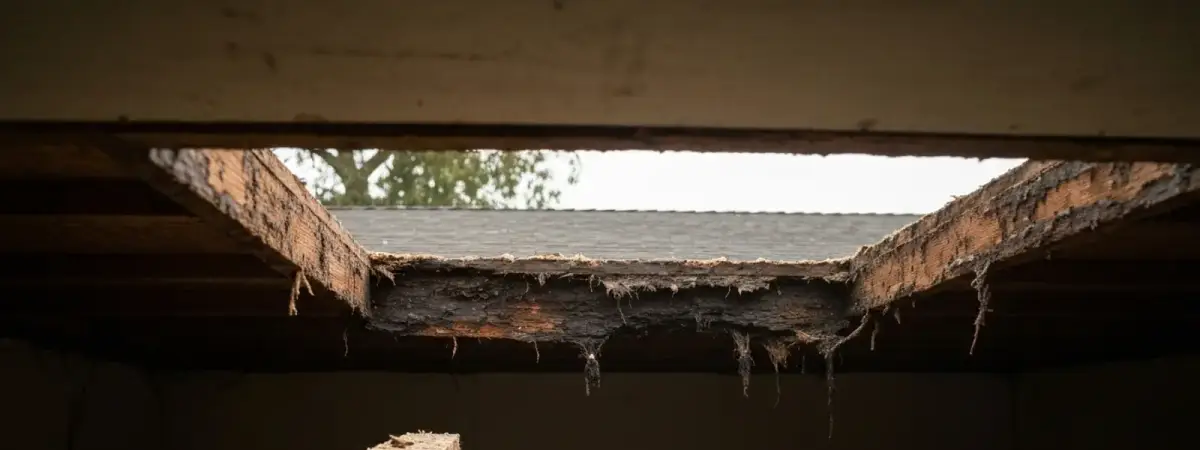
Dry Rot Repair Modesto performs rafter end rot repair across the Central Valley. Rafter ends are vulnerable at the eave overhang, where moisture intrusion and poor ventilation accelerate fungal decay. Water wicking into the exposed end grain compromises roofline structural integrity, spreading into fascia boards and soffit panels. We assess damage to determine load-bearing capacity. Our crew removes decayed sections, applying wood consolidant and two-part epoxy systems to surface-level rot on Craftsman home rafter tails, or sistering rafters with new structural treated lumber for deeper decay. We correct moisture sources, like clogged gutters, to prevent decay returning to roof framing. Related services include Gutter & Drainage Correction for Rot Prevention.
WE SPECIALIZE IN RAFTER END ROT REPAIR
Our rafter end rot repair addresses both cosmetic decay on exposed tails and structural deterioration within the eave overhang. We identify the moisture source and rebuild the compromised roof components using treated lumber across Modesto and the Central Valley.

We remove decayed wood from rafter ends, assessing fungal decay depth to extract compromised material. This prevents rot from migrating into the roof structure. Our crew uses precise cuts to isolate damage, preparing sound wood for structural reinforcement.
When decay compromises load-bearing capacity, we sister existing framing with new structural lumber. This attaches a rot-resistant board alongside the damaged rafter, restoring roofline structural integrity. We ensure the sistered rafter integrates with Fascia board rot repair.
In cases of severe structural decay, we perform complete rafter end replacement. We cut away the rotted section and install a new rafter tail. We integrate the new rafter end with roof sheathing and Soffit rot repair.
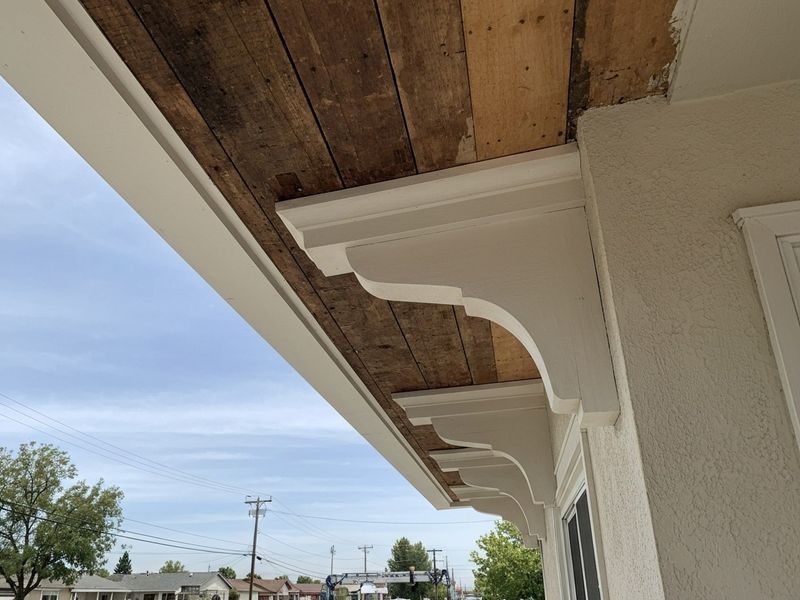
We rebuild compromised rafter ends using rot-resistant lumber, such as treated tight-grained old-growth fir or redwood. This material selection is critical for exposed rafter tails on Craftsman homes. Utilizing durable lumber provides a repair that withstands moisture intrusion.
Decay occurs at the eave overhang, where rafter ends are exposed to wind-driven rain. We remove rotted wood and apply wood consolidant and marine epoxies to restore end grain. If damage is structural, we rebuild with treated lumber.
Our rafter end rot inspection utilizes moisture meters to map decay within the roof structure. We identify cosmetic surface rot and hidden structural damage, pinpointing the moisture source. This assessment allows us to develop a targeted repair plan.
Clogged gutters cause water to overflow and wick into rafter ends, leading to fungal decay. We repair damage by removing rotted wood and rebuilding structural framing. We address the root cause by correcting drainage issues, ensuring gutters function properly.
When fungal decay compromises roofline structural stability, we provide targeted rafter end structural reinforcement. This involves installing new treated lumber alongside the weakened rafter. We ensure reinforcement integrates with existing framing, including frieze blocks and Wall stud rot repair.
Decay starts at the connection point between the rafter end and fascia board. We remove decayed wood from both components, ensuring a clean surface. We rebuild the connection using rot-resistant lumber and apply wood sealant to the end grain.
Missing flashing allows water to infiltrate the roof structure, impacting rafter ends. We repair fungal decay by cutting out compromised wood and rebuilding with treated lumber. We install necessary flashing, creating a watertight barrier that directs moisture away.

Request a Dry Rot Repair Quote in Modesto
Submit a request using the online form on this page to arrange a site visit. We will assess the rafter end decay, identify the moisture source, and provide a detailed repair plan for your property in the Central Valley.

WHY CHOOSE DRY ROT REPAIR MODESTO FOR RAFTER END ROT REPAIR
We approach rafter end rot repair by prioritizing structural stability and moisture source correction. Our process ensures the decayed wood is removed and the underlying cause is addressed, providing a durable rebuild for properties across Modesto and the Central Valley.
We are a California Licensed General Contractor (CSLB #1130391), capable of performing dry rot repair that includes structural framing members. We handle decayed rafter ends by sistering or replacing the compromised wood, ensuring the load-bearing capacity of the roofline.
We address the root cause by identifying and correcting the moisture source, ensuring the wood decay does not immediately return. We evaluate flashing, gutters, and ventilation to prevent water from wicking into the newly repaired rafter end grain.
We use moisture meters for accurate diagnosis and rebuild with rot-resistant and treated lumber for lasting results. This allows us to map the extent of the fungal decay within the eave overhang, ensuring all compromised structural wood is removed.
We utilize wood consolidants and two-part epoxy systems for surface-level, non-load-bearing cosmetic rot repair. This is particularly effective for exposed rafter tails on Craftsman homes, restoring the architectural detail without requiring complete structural replacement of the roof component.
We coordinate directly with sister divisions for out-of-scope work like full roof replacement or water damage restoration. If the rafter end decay extends into the main roof decking, we ensure the project is handled by the appropriate specialized team.

We provide targeted rafter end rot repair that addresses both the visible decay and the underlying moisture issue. Submit a request using the online form on this page to arrange an inspection of your property in Modesto.
OUR PROVEN PROCESS FOR RAFTER END ROT REPAIR
Our process focuses on accurate diagnosis, precise removal of decayed wood, and structural rebuilding. We ensure every rafter end repair includes correcting the moisture source, providing a stable and durable outcome for your roofline in the Central Valley.

We begin with a thorough inspection in Modesto, CA, using moisture meters to accurately map the extent of the dry rot. We diagnose the decayed wood and pinpoint the specific moisture source causing the fungal growth in the rafters.
Our crew precisely removes the decayed wood sections. We then treat the remaining sound wood and surrounding area to halt further fungal activity before any rebuilding or structural reinforcement begins on the compromised rafter ends and adjacent roof components.
We rebuild the affected component. Structural rot requires sistering or replacement with treated lumber, while cosmetic dry rot on trim may be restored using wood consolidant and two-part epoxy systems, ensuring the rafter tails regain their original structural integrity.
The crucial step in Modesto dry rot repair is fixing the cause. This involves repairing flashing, correcting drainage, or improving ventilation to ensure the repaired area stays dry and decay-free long-term, protecting the newly installed rafter end framing members.
After the structural and moisture corrections are complete, we finish the repaired area to match the existing structure. Our team ensures all construction debris from the repair is removed from your property, leaving the eave overhang clean and functional.
This systematic approach ensures the rafter end decay is fully resolved and the structural integrity is restored. Use the contact form to arrange a free site visit and receive a detailed assessment of your property in Modesto.
BENEFITS OF RAFTER END ROT REPAIR IN MODESTO
Repairing decayed rafter ends restores the structural stability of the eave overhang and prevents further damage to the roofline. Addressing the rot and the moisture source ensures the framing remains secure against environmental exposure in the Central Valley.
Rebuilding compromised rafter ends restores the load-bearing capacity of the eave overhang. By sistering or replacing the decayed wood with treated lumber, we ensure the roofline remains stable and capable of supporting the fascia boards and the roof decking.
Removing the decayed wood from the rafter tails prevents the fungal decay from migrating further into the structural framing. This targeted extraction protects the remaining sound wood, mitigating the risk of extensive damage to the broader roof structure.
Correcting the underlying moisture source, such as failing flashing or clogged gutters, ensures the repaired rafter ends remain dry. This preventative measure stops water from wicking into the end grain, protecting the new treated lumber from future fungal decay.
For homes with exposed rafter tails, such as Craftsman styles, applying wood consolidant and epoxy materials restores the original architectural profile. This cosmetic repair maintains the aesthetic value of the property while addressing surface-level decay on the overhang.
Rebuilding structural rafter ends ensures the roof framing meets local building standards. Our use of proper sistering techniques and appropriate lumber guarantees the repair provides the necessary support for the eave overhang, maintaining the safety of the property.

Addressing rafter end decay protects the structural integrity of your roofline and prevents more extensive damage. Submit a request using the online form on this page to arrange an inspection and secure your property in the Central Valley.
WHERE WE WORK IN MODESTO
We provide rafter end rot repair across Modesto and the surrounding Central Valley, addressing both structural framing and cosmetic decay on exposed tails. (GPS 37.6391, -120.9969). We identify the moisture source and rebuild the compromised roof components.

We perform rafter end decay removal and structural sistering across Central Modesto, including Ceres and Riverbank. We address moisture intrusion at the eave overhang, rebuilding compromised rafter tails with treated lumber to restore the integrity of the roofline.
Ceres, Riverbank, Salida, Keyes, Hickman, Empire, Bret Harte, Los Banos
Our team rebuilds exposed rafter tails on Craftsman homes in Stockton, Lodi, and Manteca. We utilize wood consolidant and marine epoxies for surface-level rot, ensuring the architectural details remain intact while correcting the underlying moisture source causing the decay.
Stockton, Lodi, Manteca, Tracy, Lathrop, Ripon, Escalon, Farmington
We provide structural rafter end replacement in Oakdale, Waterford, and Jamestown. We assess the load-bearing capacity of the eave overhang, removing the fungal decay and installing new treated lumber to secure the framing against wind-driven rain and moisture.
Oakdale, Waterford, La Grange, Knights Ferry, Copperopolis, Valley Home, Jamestown, Chinese Camp
We address rafter end rot from gutter overflow in Turlock, Merced, and Atwater. We repair the structural damage by sistering the framing and correct the drainage issues, ensuring water no longer wicks into the end grain of the lumber.
Turlock, Newman, Gustine, Livingston, Atwater, Merced, Hilmar, Delhi
We repair rafter end rot at the fascia connection in Patterson, Discovery Bay, and Byron. We rebuild the junction with rot-resistant lumber and install proper flashing, creating a watertight barrier that protects the structural integrity of the roof structure.
Patterson, Westley, Vernalis, Crows Landing, Grayson, Diablo Grande, Byron, Discovery Bay
We provide structural rafter end repair across these Central Valley zones, ensuring the eave overhang is stable and protected from moisture. Use the contact form to arrange a free site visit for your property in the Modesto area.
ANSWERS TO YOUR TOP RAFTER END ROT REPAIR QUESTIONS
We address common questions about rafter end rot repair, focusing on the structural assessment, the removal of decayed wood, and the materials used for the rebuild. These factual answers explain the process for properties in the Central Valley.
Fixing rotted rafter ends requires removing the decayed wood entirely. If the damage is structural, we sister the rafter with new treated lumber or replace the compromised end. We also correct the moisture source to prevent the decay returning.
Wood rot cannot be stopped if the moisture source remains. We halt the fungal decay by removing the compromised wood, treating the remaining sound structure, and correcting the flashing or drainage issue that allowed water to infiltrate the rafter.
The cost to repair a rafter tail depends on the extent of the decay. Surface-level cosmetic repair using epoxy materials is less intensive than structural sistering or complete replacement. We provide a detailed estimate after inspecting the eave overhang.
Rotting wood in the roof structure is a serious issue that requires timely repair to prevent structural failure. While not always an immediate emergency, ignoring decayed rafter ends allows the fungus to spread, increasing the scope of the rebuild.
Replacing a rotten rafter involves assessing the load-bearing requirements, removing the decayed section, and installing new structural lumber. The cost varies based on accessibility, the length of the replacement, and the necessary moisture source corrections at the roof edge.

Wood rot repair costs are determined by the severity of the structural damage and the required moisture source correction. Repairing a single exposed rafter tail differs significantly from rebuilding multiple load-bearing framing members across the entire eave overhang.
While some roofers replace superficial decking, structural rafter end repair requires a licensed general contractor capable of addressing load-bearing framing. We handle the structural rebuilding and coordinate with sister divisions if a full roof tear-off is also necessary.
Replacing rafter tails without removing the roof involves cutting the decayed end back to sound wood and sistering new treated lumber alongside the existing framing. We ensure the new tail matches the roof pitch and overhang measurement precisely.
Sistering rafter tails requires attaching a new structural board alongside the compromised framing member. We remove the decayed wood, treat the remaining structure, and securely fasten the new treated lumber to restore the load-bearing capacity of the eave.
Cosmetic, non-structural rot on exposed rafter tails can sometimes be fixed without replacement using wood consolidants and two-part epoxy systems. However, if the decay compromises the load-bearing framing, the affected wood must be removed and the structure rebuilt.
We assess the structural damage and implement the correct repair method for your rafter ends. Submit a request using the online form on this page to arrange an inspection and receive a detailed plan for your property.
LET'S TALK: START YOUR RAFTER END ROT REPAIR PROJECT IN MODESTO TODAY
Dry Rot Repair Modesto provides structural rafter end rot repair across the Central Valley. We assess damage at the eave overhang, remove fungal decay, and rebuild compromised framing using treated lumber. Our crew applies wood consolidant and two-part epoxy systems to surface-level rot, ensuring the roofline remains stable.
Submit a request using the online form on this page. We will review your rafter end rot issue, schedule a site visit to assess structural damage, and provide a detailed plan to correct the decay and moisture source. Our crew uses precise cuts to isolate the damage.
Quick Find: All Dry Rot Repair Services in Modesto, CA
Home · Window & Door Rot Repair · Window Sill Rot Repair · Window Frame Rot Repair · Window Casing & Trim Rot Repair · Window Jamb Rot Repair · Exterior Door Frame Rot Repair · Door Threshold Rot Repair · French Door Frame Rot Repair · Sliding Glass Door Frame Rot Repair · Garage Door Jamb Rot Repair · Window & Door Flashing Repair · Fascia & Soffit Rot Repair · Fascia Board Rot Repair · Soffit Rot Repair · Rafter Tail Rot Repair · Gutter-Line Fascia Rot Repair · Roof Edge Trim Rot Repair · Vented Soffit Panel Rot Repair · Fascia Board Replacement · Soffit Board Replacement · Eave Overhang Rot Repair · Fascia & Soffit Moisture Barrier Repair · Siding & Trim Rot Repair · Wood Siding Rot Repair · Siding Board Replacement · Corner Board Rot Repair · Band Board Rot Repair · Exterior Trim Rot Repair · Decorative Column Rot Repair · Shutter & Trim Rot Repair · Stucco-Trim Transition Rot Repair · Cedar Siding Rot Repair · Board & Batten Siding Rot Repair · Deck & Porch Rot Repair · Deck Framing Rot Repair · Deck Joist Rot Repair · Deck Ledger Board Rot Repair · Deck Railing Rot Repair · Deck Stair Rot Repair · Porch Post Rot Repair · Porch Flooring Rot Repair · Pergola Rot Repair · Deck Beam & Post Rot Repair · Elevated Deck Structural Rot Repair · Structural Framing Rot Repair · Wall Stud Rot Repair · Rim Joist Rot Repair · Header Beam Rot Repair · Sill Plate Rot Repair · Subfloor Rot Repair · Floor Joist Rot Repair · Load-Bearing Wall Rot Repair · Crawl Space Framing Rot Repair · Support Beam Rot Repair · Structural Sheathing Rot Repair · Eave & Roofline Rot Repair · Eave Rot Repair · Roof Edge Rot Repair · Rafter End Rot Repair · Roof Sheathing Rot Repair · Chimney Chase Rot Repair · Dormer Rot Repair · Roof-to-Wall Transition Rot Repair · Gable End Rot Repair · Skylight Frame Rot Repair · Valley-Adjacent Trim Rot Repair · Garage, Shed & Outbuilding Rot Repair · Garage Framing Rot Repair · Garage Door Frame Rot Repair · Shed Framing Rot Repair · Shed Siding Rot Repair · Detached Structure Sill Plate Rot Repair · Carport Post Rot Repair · Barn & Outbuilding Rot Repair · Workshop Framing Rot Repair · Outbuilding Roof Trim Rot Repair · Detached Garage Subfloor Rot Repair · Fence & Exterior Structure Rot Repair · Fence Post Rot Repair · Fence Panel Rot Repair · Gate Post Rot Repair · Arbor Rot Repair · Gazebo Rot Repair · Trellis Rot Repair · Retaining Wall Timber Rot Repair · Wood Planter Box Rot Repair · Exterior Stair & Landing Rot Repair · Wood Walkway Rot Repair · Commercial & Multifamily Dry Rot Repair · Commercial Storefront Framing Rot Repair · Multifamily Building Exterior Rot Repair · Property Management Rot Repair Program · HOA Common-Area Rot Repair · Tenant Improvement Wood Framing Rot Repair · Commercial Deck & Walkway Rot Repair · Apartment Balcony Rot Repair · Commercial Window & Door Rot Repair · Portfolio-Wide Rot Inspection & Repair · Insurance-Documented Commercial Rot Repair · Moisture Source & Preventative Rot Treatment · Moisture Source Inspection & Correction · Flashing Repair & Installation · Wood Consolidant & Epoxy Treatment · Gutter & Drainage Correction for Rot Prevention · Crawl Space Ventilation Improvement · Vapor Barrier Installation · Wood Sealant & Preventative Coating · Termite-Adjacent Rot Assessment & Coordination · Rot-Resistant Wood Replacement · Post-Repair Moisture Monitoring